
 Chat with Sales & Support

How to Generate Unlimited Leads Using Data + Automation: The Complete Step-by-Step Guide for 2026
Home » How to Generate Unlimited Leads Using Data + Automation: The Complete Step-by-Step Guide for 2026

See How My Agency DIGIBROOD Can Drive Real Growth for Your Business
Digital Marketing – performance-driven strategies to generate high-quality leads and consistent sales.
Website Development – fast, conversion-focused websites built to scale your business online.
WhatsApp & Bulk Marketing – powerful automation tools to reach thousands of customers instantly.
Data & Lead Solutions – verified, targeted databases to boost your outreach and ROI.
We don’t just offer services—we build systems that grow your business.
Introduction: Why Data + Automation Is the Future of Lead Generation
Every business needs leads to survive. Without a consistent flow of qualified prospects entering your pipeline, growth stalls, revenue flatlines, and competitors overtake you. Yet the vast majority of Indian businesses in 2026 are still generating leads the old-fashioned way—cold calling from random directories, running untargeted ads, sending mass emails to purchased lists with no segmentation, and relying on manual follow-ups that fall through the cracks.
The result? Wasted budgets, exhausted sales teams, and a conversion rate that barely moves the needle.
There is a better way. The businesses that are growing fastest in India right now have built something fundamentally different: a lead generation system powered by data and automation. Instead of chasing leads one by one, they’re attracting and capturing thousands of qualified prospects every month—on autopilot—by combining high-quality, targeted data with intelligent automation workflows.
This guide will show you exactly how to build that system from scratch. Whether you’re a startup, a digital agency, a coaching institute, or an established enterprise, the framework you’ll learn here will transform the way you generate, nurture, and convert leads.
And if you want to shortcut the process, DIGIBROOD’s lead generation service gives you the data, tools, and automation setup to launch your lead engine immediately.
What Is Lead Generation and Why Does It Matter?
Lead generation is the process of identifying, attracting, and capturing potential customers who have expressed interest in your product, service, or brand. A “lead” is any individual or business that has provided contact information—a phone number, email address, WhatsApp number, or form submission—signalling that they may be open to learning more or making a purchase.
Lead generation matters because it is the first and most critical stage of the sales process. Without leads, there are no conversations. Without conversations, there are no sales. Without sales, there is no business. It’s that simple.
The key distinction in 2026 is between random lead generation and systematic lead generation. Random lead generation relies on hope—hoping that your ad reaches the right person, hoping that someone will pick up your cold call, hoping that your email won’t land in spam. Systematic lead generation, on the other hand, uses data to identify exactly who your ideal customer is, and automation to reach them at scale with the right message at the right time.
A professional lead generation service like DIGIBROOD builds this systematic approach for you, combining verified databases, targeted outreach, and automated follow-ups into a single, scalable engine.
Why Traditional Lead Generation Methods Are Failing in 2026
Before diving into the modern system, it’s important to understand why the old methods no longer work. Here are the most common traditional approaches and their fundamental limitations:
1. Cold Calling from Unverified Lists
Cold calling has always been a numbers game, but in 2026, the numbers are worse than ever. Most people don’t answer calls from unknown numbers. Those who do are usually annoyed, uninterested, and unlikely to convert. When you’re calling from an unverified or outdated list, the problem is compounded—you’re wasting your team’s time on wrong numbers, disconnected lines, and completely irrelevant contacts. Even with newer tools like AI-powered calling systems, the underlying data must be accurate or the technology can’t save you.
2. Untargeted Digital Advertising
Running Facebook or Google ads without proper audience segmentation is like throwing money into the wind. Without targeting based on location, demographics, interests, and behaviour, your ads are shown to people who have no need for your product. The result is high cost per lead, low conversion rates, and a negative return on ad spend.
3. Manual Follow-Ups and No CRM
Even when businesses do generate leads, they often lose them due to poor follow-up. Sales teams track leads in spreadsheets (or worse, in their heads), forget to follow up at critical moments, and let hot prospects go cold. Without a CRM and automated follow-up sequences, your lead pipeline leaks like a broken bucket.
4. Generic Mass Emails
Blasting the same generic email to thousands of contacts—without personalisation, segmentation, or sequencing—results in abysmal open rates (often below 10%), high unsubscribe rates, and potential spam blacklisting. In 2026, consumers expect personalised, relevant communication. Anything less gets ignored. Quality bulk email marketing software is essential to avoid these pitfalls.
The common thread across all these failures? A lack of quality data and a lack of automation. Solve both, and you solve lead generation.
The New Model: Data + Automation = Unlimited Leads
The most effective lead generation system in 2026 rests on two pillars: high-quality data as your fuel, and intelligent automation as your engine. When combined, they create a self-sustaining pipeline that generates, nurtures, and converts leads around the clock.
Pillar 1: Data (Your Fuel)
Data is the foundation of every successful marketing campaign. Without accurate, targeted data, even the most sophisticated automation will fail. The right data tells you exactly who to reach, where they are, what they need, and how to communicate with them.
The types of data that power effective lead generation include:
- Geographic data: City, state, pin code, and region—essential for local businesses and geo-targeted campaigns.
- Demographic data: Age, gender, income level, profession, and education—critical for crafting relevant messaging.
- Industry data: Business type, sector, company size, and decision-maker contacts—vital for B2B lead generation.
- Behavioural data: Purchase history, website visits, app usage, and engagement patterns—powerful for retargeting and consumer personalisation.
- Interest data: Topics, products, and services the prospect has shown interest in—perfect for segmented campaigns.
DIGIBROOD’s all India database provides comprehensive, verified contact data covering every state, city, and industry in India—giving you the fuel to power campaigns of any size and scope.
Pillar 2: Automation (Your Engine)
Automation transforms your data from a static list into a dynamic lead generation machine. With the right automation tools, you can send personalised messages to thousands of contacts simultaneously via WhatsApp, email, and SMS. You can set up auto-replies that respond to enquiries instantly, 24 hours a day, 7 days a week. You can build drip campaigns that nurture leads over days or weeks with sequenced messages. You can score and segment leads automatically based on their engagement and responses. And you can notify your sales team the moment a lead is ready for personal outreach.
The combination of quality data and intelligent automation is what separates businesses that generate a handful of leads per month from those that generate thousands. And it’s exactly what a professional lead generation service delivers.
Step-by-Step: How to Build Your Automated Lead Generation System
Follow these seven steps to build a lead generation engine that runs on autopilot and scales with your business.
Step 1: Acquire High-Quality, Targeted Data
Your entire system begins with data. The quality of your database determines the quality of your leads, which determines your conversion rate, which determines your revenue. There is no shortcut here—bad data produces bad results, no matter how good your messaging or automation is.
When building or acquiring your database, ensure it meets the following criteria:
- Verified and accurate: Every contact should be validated—active phone numbers, working email addresses, and correct business details. Outdated or incorrect data wastes your budget and damages your sender reputation.
- Targeted and relevant: Your database should contain contacts that match your ideal customer profile. A real estate agent doesn’t need a database of college students, and a coaching institute doesn’t need a list of manufacturing companies.
- Segmented and organised: Data should be pre-segmented by location, industry, interest, or other relevant criteria so you can run targeted campaigns from day one.
- Compliant: Ensure your data collection and usage practices comply with applicable regulations and platform guidelines.
Building this kind of database from scratch can take months or even years. That’s why thousands of Indian businesses rely on DIGIBROOD’s all India database—a ready-to-use, verified database covering every major city, state, and industry segment in India. Whether you need contacts in Mumbai or Manipur, real estate or retail, DIGIBROOD has you covered.
Step 2: Segment Your Audience for Maximum Relevance
Segmentation is the difference between a campaign that converts and one that gets ignored. Sending the same generic message to your entire database is one of the biggest mistakes businesses make. Instead, divide your contacts into meaningful segments based on:
- Location: Run city-specific or state-specific campaigns with localised messaging. A restaurant in Kolkata shouldn’t be sending offers to contacts in Chennai.
- Industry: B2B businesses should segment by industry vertical. A digital marketing agency might create separate campaigns for real estate clients, healthcare providers, education institutes, and e-commerce brands.
- Interest or behaviour: If you have data on what products or services a prospect has previously shown interest in, use it. A coaching institute might segment between prospects interested in UPSC preparation versus MBA coaching.
- Funnel stage: New contacts, warm leads, and hot prospects should all receive different messaging. A first-time contact needs awareness and trust-building; a warm lead needs social proof and a compelling offer; a hot prospect needs a direct CTA and urgency.
Proper segmentation typically improves campaign response rates by 2x to 5x compared to unsegmented blasts.
Step 3: Build a Lead Capture Funnel
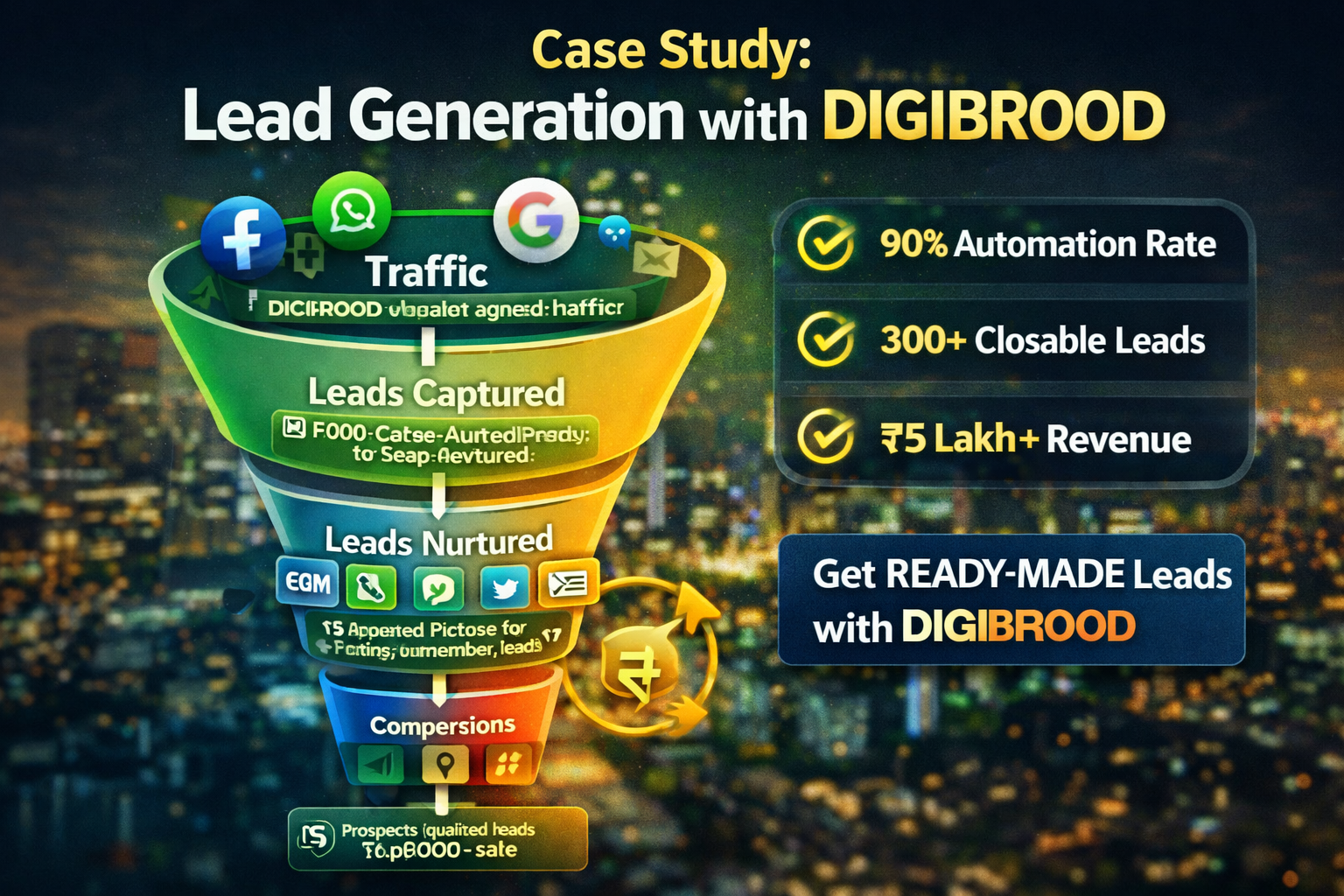
A lead funnel is the structured path that takes a stranger from first contact to qualified lead. Every effective funnel has four stages:
| Funnel Stage | What Happens | Tools Used |
|---|---|---|
| Traffic | Prospect encounters your message or ad | WhatsApp bulk messaging, social media ads, SEO, referrals |
| Capture | Prospect provides contact info or responds | Landing pages, WhatsApp reply, lead forms, chatbots |
| Nurture | Prospect receives follow-up content and offers | Email sequences, WhatsApp drip campaigns, retargeting ads |
| Convert | Prospect becomes a paying customer | Sales calls, personalised offers, demos, consultations |
The most effective funnels use WhatsApp as the primary capture and nurture channel because of its unmatched open rates (80–95%) and response rates (20–40%). When combined with data from an all India database, your funnel reaches exactly the right people at every stage.
Step 4: Deploy WhatsApp Automation for Instant Engagement
WhatsApp automation is the single most impactful tool in your lead generation arsenal. Here’s how a typical automated WhatsApp lead generation flow works:
- Initial outreach: A personalised bulk message is sent to a targeted segment from your database. Example: “Hi Priya, we help Pune-based coaching institutes generate 100+ student enquiries per month. Would you like to learn how?”
- Instant auto-reply: When the prospect replies (even with a single word like “Yes” or “Interested”), an automated response is triggered immediately with relevant details, a brochure, or a link to book a call.
- Lead capture: The prospect’s response, contact details, and engagement data are automatically logged in your CRM—no manual data entry required.
- Follow-up sequence: If the prospect doesn’t respond to the initial message, an automated follow-up is sent after a pre-set interval (for example, 24 hours, 3 days, and 7 days). Each follow-up provides additional value—a case study, testimonial, or limited-time offer.
- Sales handoff: When a lead reaches a certain engagement threshold (replied multiple times, clicked a link, requested a call), your sales team is automatically notified to take over with personal outreach.
This entire flow runs 24/7 without any manual intervention. You set it up once, and it generates and nurtures leads around the clock.
Step 5: Layer in Email Automation for Long-Term Nurturing
While WhatsApp excels at instant engagement and high open rates, email remains valuable for longer-form communication, detailed content delivery, and multi-touchpoint nurturing. The most effective lead generation systems use both channels together.
Your email automation should include a welcome sequence for new leads (3–5 emails over the first week introducing your brand, value proposition, and social proof), an educational drip series that positions you as an authority in your field, promotional campaigns timed around product launches, seasonal offers, or events, and re-engagement campaigns targeting leads who have gone cold.
The key is ensuring your WhatsApp and email campaigns work in harmony—not sending the same message on both channels at the same time, but using each channel for what it does best.
Step 6: Personalise Everything for Higher Conversions
Personalisation is no longer optional—it’s the baseline expectation. Generic messages get ignored. Personalised messages get responses. Here’s the difference:
| Approach | Message Example | Typical Response Rate |
|---|---|---|
| Generic (no personalisation) | “Buy our marketing services now!” | 1–3% |
| Basic personalisation (name only) | “Hi Rahul, check out our marketing services.” | 5–10% |
| Advanced personalisation (name + context) | “Hi Rahul, we help Kolkata-based IT companies generate 50+ B2B leads per month. Want details?” | 20–40% |
Advanced personalisation uses data points from your database—name, location, industry, company size, past interactions—to craft messages that feel individually written, even when sent to thousands. This is where the power of a comprehensive all India database combined with automation truly shines, driving higher conversions across every campaign.
Step 7: Track, Analyse, and Optimise Every Campaign
The final step is continuous measurement and improvement. Without tracking, you’re flying blind. Your lead generation system should provide real-time visibility into the following metrics:
- Message delivery rate: What percentage of your messages are actually reaching recipients? Low delivery rates signal data quality issues.
- Open and read rate: Are people opening your messages? WhatsApp typically delivers 80–95% read rates, but if yours are significantly lower, your messaging or timing needs adjustment.
- Reply and response rate: This is the most important engagement metric. A healthy WhatsApp campaign should generate 15–40% reply rates.
- Click-through rate: If your messages include links (to landing pages, booking forms, or product pages), track how many recipients are clicking.
- Lead conversion rate: Of the leads captured, how many are converting to paying customers? This tells you whether your funnel is working end to end.
- Cost per lead and cost per acquisition: Track your total campaign cost against leads generated and customers acquired to calculate your true ROI.
Use this data to continuously refine your message copy, audience segments, sending times, follow-up intervals, and offers. The businesses that win at lead generation are the ones that treat every campaign as a learning opportunity and improve with every iteration.
Real-World Case Study: How a Digital Agency Generated 150 Qualified Leads in 30 Days
To illustrate the power of data + automation, here’s a real example from a digital marketing agency that used DIGIBROOD’s lead generation service to transform their pipeline:
The Challenge
The agency was spending over ₹50,000 per month on Facebook and Google ads with inconsistent results. Some months they’d generate 30–40 leads; other months, fewer than 10. Their sales team was overwhelmed with manual follow-ups, and leads were slipping through the cracks due to lack of automation.
The Solution
They partnered with DIGIBROOD and implemented the following system:
- Database: Acquired a targeted business database of 10,000 contacts from DIGIBROOD’s all India database, filtered for business owners in tier-1 and tier-2 cities across five key industries.
- Messaging: Crafted personalised WhatsApp messages for each industry segment, highlighting relevant case studies and results.
- Automation: Set up automated reply flows, follow-up sequences (Day 1, Day 3, Day 7), and CRM integration for lead tracking.
- Multi-channel: Layered email nurture sequences for leads who engaged but didn’t convert immediately.
The Results
| Metric | Before DIGIBROOD | After DIGIBROOD |
|---|---|---|
| Messages sent per month | 500 (manual outreach) | 10,000 (automated) |
| Response rate | 3–5% | 22% |
| Qualified leads per month | 15–25 | 150+ |
| Conversions per month | 3–5 | 25+ |
| Cost per lead | ₹1,200–₹2,000 | Under ₹200 |
| Monthly ad spend | ₹50,000+ | ₹10,000 (database + tools) |
The agency reduced their cost per lead by over 80% while increasing qualified leads by 6x—all within the first 30 days.
Essential Tools for Data-Driven Lead Generation
Building your automated lead generation system requires the right technology stack. Here’s what you need:
Core Tools (Must-Have)
- Targeted contact database: The foundation of everything. DIGIBROOD’s all India database is the most comprehensive verified database available for Indian businesses.
- WhatsApp bulk messaging software: A platform that lets you send personalised messages at scale with automation, scheduling, and analytics.
- CRM system: A central hub to track every lead’s journey from first contact to conversion. Options range from simple tools like Google Sheets to advanced platforms like HubSpot or Zoho CRM.
- Landing pages: Dedicated pages designed to capture lead information through forms, calls to action, and compelling copy.
Advanced Tools (For Scaling)
- Multi-channel automation platform: A system that coordinates WhatsApp, email, SMS, and retargeting campaigns from a single dashboard.
- API integrations: Connect your messaging tools, CRM, and analytics platforms for seamless data flow and real-time reporting.
- AI-powered chatbots: Intelligent bots that qualify leads through conversational flows, answer common questions, and route hot prospects to your sales team.
- Analytics dashboard: A centralised reporting tool that gives you real-time visibility into every metric across every channel.
DIGIBROOD’s lead generation service bundles the database, messaging tools, automation setup, and strategic guidance into a single, done-for-you package—so you can focus on closing deals rather than building infrastructure.
Common Lead Generation Mistakes That Kill Your Results
Even with the right tools, certain mistakes can cripple your lead generation efforts. Here are the most damaging ones and how to avoid them:
- Using unverified or outdated data: Sending messages to wrong numbers or inactive contacts wastes your budget, damages your sender reputation, and skews your analytics. Always invest in verified, regularly updated databases.
- Sending without segmentation: Blasting the same message to your entire list signals laziness and gets you ignored. Segment by location, industry, interest, and funnel stage for dramatically better results.
- No follow-up system: Most leads don’t convert on the first touchpoint. Research consistently shows that it takes 5–7 interactions before a prospect is ready to buy. If you’re not following up automatically, you’re abandoning revenue.
- Spamming instead of providing value: Aggressive, pushy, sales-heavy messages get you blocked and banned. Lead with value—helpful information, free resources, genuine solutions—and the sales will follow naturally.
- Ignoring analytics: If you’re not measuring delivery rates, open rates, response rates, and conversion rates, you have no way to know what’s working and what isn’t. Data without analysis is just noise.
- No clear call to action: Every message should tell the recipient exactly what to do next. Vague messages produce vague results.
Lead Generation Channels Compared: Where Data + Automation Wins
| Channel | Cost | Speed to Results | Scalability | Personalisation | Avg. Conversion |
|---|---|---|---|---|---|
| Data + WhatsApp Automation | Low | Immediate | Very High | Very High | 15–25% |
| Facebook/Google Ads | High | 1–2 weeks | High | Medium | 2–5% |
| Cold Calling | Medium | Slow | Very Low | High (but manual) | 1–3% |
| Email Marketing | Low | 1–2 days | High | Medium | 1–5% |
| SEO / Content Marketing | Low | 3–6 months | Very High | Low | 2–10% |
| Referral / Word of Mouth | Free | Unpredictable | Low | Very High | 20–40% |
Data-driven WhatsApp automation offers the best combination of cost, speed, scalability, and personalisation—making it the top choice for Indian businesses in 2026. Combined with a professional lead generation service, it becomes a complete, turnkey solution.
Pro Tips for Generating Unlimited Leads
- Start with niche targeting, then expand: Don’t try to reach everyone at once. Start with a specific audience segment where you have the strongest offer, prove the model, and then expand to additional segments.
- Send messages at optimal times: Research and testing consistently show that WhatsApp messages sent between 10 AM and 1 PM, and again between 4 PM and 7 PM IST, receive the highest engagement.
- Follow up at least 3–5 times: Don’t give up after one message. A structured follow-up sequence spread across 1—2 weeks dramatically increases your conversion rate.
- Combine WhatsApp + Email for multi-channel impact: Use WhatsApp for instant, high-open-rate engagement and email for detailed content, case studies, and long-term nurturing.
- Lead with value, not selling: Share free resources, tips, case studies, and insights. Prospects who receive value first are far more likely to buy later.
- Test, measure, and iterate relentlessly: Every message, audience, and offer is a hypothesis. Test it, measure the results, learn what works, and improve with every campaign.
- Invest in quality data above all else: Your data is the single most important asset in your lead generation system. A smaller, verified, well-segmented database will always outperform a massive, unverified, unsegmented one.
Frequently Asked Questions About Lead Generation
What is a lead generation service?
A lead generation service is a professional solution that helps businesses identify, attract, and capture potential customers through targeted data, outreach campaigns, and automation. DIGIBROOD’s lead generation service provides end-to-end support including verified databases, WhatsApp and email automation, funnel setup, and campaign management.
What is an all India database?
An all India database is a comprehensive, pan-India contact database covering every state, city, and major industry. It includes verified phone numbers, email addresses, business details, and demographic information—allowing businesses to run targeted campaigns across the entire country.
How many leads can I generate with data + automation?
The number depends on your database size, message quality, targeting, and follow-up strategy. Businesses using DIGIBROOD’s system typically generate 100–500+ qualified leads per month, depending on their industry and campaign scale.
Is automated lead generation legal in India?
Yes, automated lead generation is legal in India when done responsibly. Use opt-in contacts where possible, follow platform guidelines, provide opt-out options, and handle data with care. DIGIBROOD’s systems are designed with compliance best practices built in.
How quickly can I see results?
Most businesses start seeing responses within the first 24–48 hours of launching their first campaign. Qualified leads typically begin flowing within the first week, with momentum building as follow-up sequences run and the system is optimised based on early data.
Can this work for B2B businesses?
Absolutely. B2B lead generation is one of the strongest use cases for data + automation. With DIGIBROOD’s industry-segmented all India database, you can reach decision-makers in any vertical—IT, manufacturing, healthcare, education, finance, and more.
Conclusion: Build Your Lead Generation Engine Today
In 2026, the businesses that are growing fastest are not the ones spending the most on ads or hiring the largest sales teams. They’re the ones that have built systematic, data-driven, automated lead generation engines that produce consistent, predictable results month after month.
The formula is simple. Data gives you reach—the ability to connect with exactly the right people, in the right location, in the right industry, at the right time. Automation gives you scale—the ability to run personalised campaigns, follow-up sequences, and lead nurture workflows that operate 24/7 without manual effort.
Together, data and automation create a system that can generate virtually unlimited leads without increasing your workload, your headcount, or your budget.
Ready to build your lead generation engine? Here’s how to get started with DIGIBROOD:
- Access verified, targeted contact data with DIGIBROOD’s all India database
- Launch your automated lead pipeline with DIGIBROOD’s lead generation service
Visit digibrood.com or contact the DIGIBROOD team directly to get started today.